A Comprehensive Guide to Skid Fabrication for New Manufacturers
Understanding Skid Fabrication
What is Skid Fabrication?
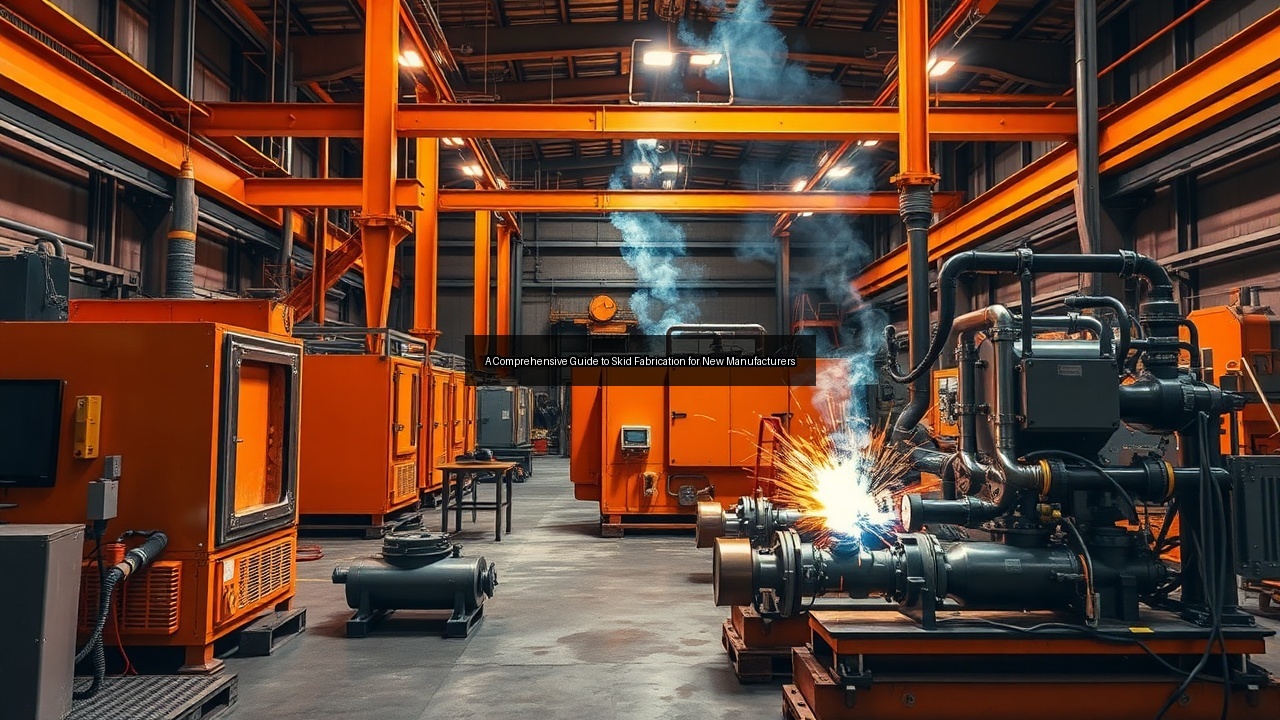
Skid fabrication assembles modular process skids into complete, transportable units that integrate piping, equipment, and controls for industrial operations. Manufacturers build these skids in controlled shop environments before shipping them to sites for quick installation. This approach reduces field construction time and improves consistency across projects in the oil and gas industry. Custom skid fabrication allows engineers to tailor each unit to specific process requirements, whether for chemical handling or fluid separation. A modular skid typically includes structural frames, valves, pumps, and instrumentation mounted on a steel base. Companies that specialize in skid fabrication deliver ready-to-connect systems that minimize on-site welding and testing.
At its core, skid fabrication represents a shift from traditional stick-built construction to a factory-controlled methodology that enhances precision and repeatability. Each skid functions as a self-contained module, often incorporating pre-assembled manifolds, electrical junction boxes, and PLC-based control panels. This design philosophy enables seamless integration with existing plant infrastructure, allowing operators to expand capacity through plug-and-play connections. In practice, fabricators utilize advanced modeling software to ensure that every component aligns perfectly, reducing the risk of misalignment during final hookup.
Importance of Skid Fabrication in the Oil and Gas Industry
Skid fabrication supports rapid deployment of modular process systems in remote oil and gas locations where traditional construction faces delays from weather and logistics. Fabricators create robust units that withstand harsh conditions while meeting strict pressure and safety codes. Modular skids streamline commissioning because technicians complete most assembly and quality checks in the shop. This reduces overall project risk and accelerates production startup. Operators rely on skid fabrication to scale facilities efficiently, adding capacity without extended downtime. The oil and gas industry values these systems for their repeatability and lower total installed cost compared with stick-built alternatives.
By concentrating fabrication activities indoors, companies mitigate exposure to extreme temperatures, high winds, and limited access common in offshore platforms or Arctic fields. The resulting modules arrive with factory-certified integrity, often https://agifabricators.com/process-skids/ including pre-installed fire and gas detection systems tailored to hydrocarbon environments. This method has proven especially valuable during brownfield expansions, where operators must minimize production interruptions while upgrading separation or compression trains.
Types of Modular Skids
Modular skids come in several configurations to match diverse process needs. Pump skids handle fluid transfer with integrated motors and controls. Metering skids provide accurate flow measurement for custody transfer applications. Chemical injection skids deliver precise additive dosing under high pressure. Filtration skids remove solids from gas or liquid streams before downstream equipment. Heat exchanger skids manage temperature control in refining operations. Each type incorporates alloy materials selected for corrosion resistance and strength. Manufacturers customize layouts to fit available space and maintenance access requirements.
Additional variants include wellhead control skids for choke and safety valve management, flare knock-out skids for liquid recovery during emergency venting, and produced-water treatment skids that combine separation, de-oiling, and reinjection functions. Material selection often involves duplex stainless steels or Inconel overlays when handling sour service fluids containing hydrogen sulfide, ensuring long-term durability in aggressive upstream environments.
The Skid Fabrication Process
Designing Modular Process Skids
Design begins with process flow diagrams and equipment specifications that define the skid's function. Engineers develop detailed 3D models to optimize pipe routing, support placement, and maintenance clearances. Software tools simulate stresses, thermal expansion, and vibration to prevent operational issues. Collaboration between the client and fabricator ensures the design meets site constraints and regulatory standards. Modular process skid design emphasizes transportability, so dimensions stay within standard shipping limits. Accurate design documentation guides every subsequent fabrication step and reduces costly rework.
Design teams also incorporate constructability reviews and finite element analysis to validate lifting lug placements and base-frame stiffness under dynamic transport loads. Client input during the front-end engineering phase often includes site-specific wind, seismic, and blast-resistance criteria that influence structural member sizing and anchor bolt patterns.
Key Fabrication Techniques: Machining and Welding
Machining creates precise mating surfaces on structural components and prepares pipe ends for welding. CNC equipment produces consistent results on carbon steel and alloy parts. Welding joins these components using processes such as GTAW and SMAW to achieve full-penetration joints rated for high pressure. Skilled welders follow WPS procedures qualified for each material combination. Skid fabrication welding includes both shop and limited field welds when modules connect on site. Proper technique prevents distortion and maintains dimensional accuracy throughout the assembly.
Orbital welding systems are increasingly employed for high-purity or sanitary tubing applications, while submerged arc welding supports thick-wall headers in high-pressure service. Post-weld heat treatment may be applied selectively to relieve residual stresses in chrome-moly or stainless steel assemblies, preserving mechanical properties required by ASME B31.3 and API 6D standards.
Quality Control in Skid Fabrication
Quality control starts with incoming material verification and continues through every fabrication stage. Inspectors check weld integrity with radiographic or ultrasonic testing and confirm dimensions against drawings. Pressure testing validates system integrity before coating and shipping. Documentation packages record material certificates, welder qualifications, and test results for client review. A dedicated quality management program catches deviations early and maintains traceability. This systematic approach delivers skids that perform reliably from the first day of operation.
Third-party inspection agencies frequently witness hydrotesting and helium leak detection on critical service lines. Digital radiography and phased-array ultrasonics provide volumetric weld examination with minimal radiation exposure, while coordinate measuring machines verify nozzle orientations and flange parallelism to within thousandths of an inch before the skid receives final protective coatings.
Choosing the Right Skid Fabrication Company
Evaluating Skid Fabrication Services
Prospective clients review a skid fabrication company's project portfolio to confirm experience with similar process conditions and materials. They examine shop capabilities, including crane capacity, welding stations, and testing equipment. Site visits reveal workflow efficiency and cleanliness standards. References from past customers provide insight into schedule adherence and communication practices. Strong skid fabrication services include engineering support, procurement, and final documentation. Comparing these factors helps manufacturers select a partner that aligns with project goals.
Reviewing a fabricator’s safety record, backlog status, and financial stability further informs selection, particularly for multi-million-dollar modular projects requiring sustained shop availability over 12–18 months.
What to Look for in a Skid Fabricator
An experienced skid fabricator maintains certified welders and documented procedures for every alloy and pressure rating. The company should demonstrate familiarity with modular skid fabrication across multiple industries. Look for in-house machining, painting, and electrical integration to reduce subcontracting. Transparent project management tools allow real-time schedule tracking. A fabricator that invests in modern technologies typically delivers higher precision and faster turnaround. These attributes reduce risk and improve the final product quality.
Forward-looking fabricators also maintain dedicated clean rooms for instrumentation calibration and offer modular FAT (factory acceptance testing) protocols that simulate site control-system integration prior to shipment.
Licensing and Compliance Considerations
Proper licensing ensures the skid fabrication company operates legally and meets jurisdictional requirements. Verify ASME certifications for pressure vessel and piping work along with AWS welder qualifications. Compliance with OSHA standards and environmental regulations protects both workers and the end user. American fabricators often follow additional industry codes that international clients value for export projects. Reviewing these credentials during selection prevents regulatory delays during installation and startup.
Additional certifications such as ISO 45001 for occupational health and ISO 14001 for environmental management demonstrate commitment to continuous improvement beyond minimum code requirements.
Cost Considerations in Skid Fabrication
Understanding Fabrication Costs
Skid fabrication pricing reflects material, labor, engineering, and testing components. Material costs vary with alloy selection and market fluctuations. Labor hours depend on design complexity and welding requirements. Engineering fees cover detailed drawings and calculations needed for code compliance. Testing and documentation add further line items. Understanding these elements allows manufacturers to compare bids accurately and identify where value engineering can reduce expense without sacrificing performance.
Contingency allowances for potential scope changes and freight considerations for oversized modules also factor into total project economics, especially when skids must navigate inland waterways or remote road routes.
Factors Affecting Skid Fabrication Pricing
Design changes after fabrication begins drive up costs through rework and schedule compression. Material grade, pressure rating, and hazardous area classifications increase both component prices and inspection hours. Shop location influences labor rates and shipping distance to the final site. Custom features such as specialized instrumentation or insulation packages add premiums. Early involvement of the skid fabrication shop during design helps control these variables and stabilizes the budget.
Market volatility in nickel and chromium prices can significantly affect stainless and duplex steel costs, prompting some operators to lock material pricing through forward contracts at the purchase-order stage.
Cost-Effective Solutions for New Manufacturers
New manufacturers benefit from standardized modular skid designs that reuse proven layouts across multiple units. Partnering with a fabricator early in concept development identifies cost-saving opportunities in material selection and assembly methods. Phased fabrication allows payment and delivery to align with cash flow. Bulk purchasing of common components lowers per-unit pricing. These strategies help emerging companies obtain reliable modular process skids while managing capital expenditure effectively.
Standardized pump and metering skid platforms also enable faster permitting and reduced engineering hours, allowing new entrants to achieve first-oil or first-gas milestones on accelerated schedules.
Safety and Quality Management in Skid Fabrication
Implementing Safety Standards in Skid Manufacturing
Safety standards begin with hazard analysis during design and extend through shop operations. Fabricators enforce lockout procedures, proper lifting practices, and personal protective equipment use. Regular training keeps crews current on evolving regulations. Integrated safety systems on finished skids include pressure relief devices, emergency shutdowns, and clear labeling. A strong safety culture in the skid fabrication shop protects personnel and reduces liability for the end user.
Job safety analyses are performed for each weld and lift operation, while digital permit-to-work systems track confined-space entries and hot-work activities in real time.
The Role of Quality Assurance in Skid Fabrication
Quality assurance verifies that every weld, fit-up, and coating meets specifications before the skid leaves the shop. Independent inspectors supplement internal checks on critical systems. Traceability records link every component to its material certificate and test data. Continuous improvement programs analyze nonconformances to prevent recurrence. Robust quality assurance delivers skids that operate safely and require minimal corrective work after installation.
Root-cause analysis of any nonconformance feeds into updated work instructions and welder requalification programs, driving measurable reductions in rework rates over successive projects.
Technologies Enhancing Safety and Quality in Fabrication
Advanced technologies such as automated welding systems and laser scanning improve consistency while reducing human exposure to hazards. Digital twins allow virtual walkthroughs that catch design conflicts before metal is cut. Real-time monitoring of weld parameters and environmental conditions supports immediate corrective action. These tools strengthen both safety and quality management throughout the skid fabrication process and give manufacturers greater confidence in the delivered product.
Augmented-reality overlays now guide welders through complex joint preparations, while IoT-enabled torque wrenches and pressure transducers feed live data into the quality-management system for immediate traceability and audit readiness.
See Also
- Mastering Skid Fabrication Techniques for the Oil and Gas Industry
- Exploring Advanced Technologies in Modular Skid Fabrication
- The Future of Modular Skids in Energy Efficient Designs
- Customizing Modular Process Systems for Enhanced Performance
- Cost-Effective Strategies for Skid Fabrication in Construction